Showing posts with label Travel. Show all posts

14 October 2019

Kompleks PKNS Shah Alam, a Truly 'Rakyat' Destination

By Johan Ishak
14 October 2019


KOMPLEKS PKNS SHAH ALAM, is the subject matter of my recent Whatsap conversation. Some friends accused me of being high class and up market because they only see me visiting KLCC or Pavilion shopping centres. The truth is, I am not. I would occasionally visit places that shaped my childhood and many of these places provide me with ample nostalgia. These places actually soothe my mood when I am down. The contemporaries of Kompleks PKNS Shah Alam are Pertama Kompleks, Ampang Park, Wisma Yakin, Kota Raya and many more.

So, to amplify this matter, I decided to go down the memory lane specifically to justify why Kompleks PKNS is a truly people's place, i.e. Rakyat's place. The recent (2014) Government's concept of Urban Transformation Centre (UTC) was actually present four decades ago during the early 80's when Kompleks PKNS was erected. Everything was there, literally. As a child following my parents for groceries shopping, I used to wonder why do we have to go all the way to Greatwall in Klang or Jaya Supermarket in Section 14, Petaling Jaya. I kept telling myself, 'they, whoever they are, should open a supermarket in Shah Alam, where we stayed'. Lo and behold, Kompleks PKNS was launched with a new supermarket, also by Jaya Supermarket.

The complex then grew in its offerings as well as visitors. It became the central for Shah Alam. There were Government offices there especially those involving dealings with the citizen: Transport Department, Immigration Department, Registration Department, Bank Simpanan Nasional, Bank Bumiputra, Maybank, Post Office, Land Office, Taxation and many more including an ample bunch of Commissioner for Oaths, Justice of Peace and firms of solicitors. It was, and still is, the grandfather of UTC. All one had to do to settle all administrative matters is to just spend the whole morning there, then have lunch at the famous FC Fried Chicken, and end the day with groceries shopping.

It was the place to go for almost everyhing those days. Name what you want, you will get it: florists, nurseries, Berita Book Centre, McDonalds, KFC, Malay restaurants, Mamak restaurants, Guardian Pharmacy, sports equipment repair shop, hardware shop, wedding accessories shop, tailors, frame shop, Islamic items product (such as clothing for Hajj), barbers, music shop, jewellery shop, Bata, photography shop, toy shop, travel agents, optometry, leather shop, curtain shop, bakery, sundry shop, newsagent, cooperative shop (MOCCIS), driving school, property developers, valuation and real estate firms, audit firms, computer shop, carpet shop, furniture shop and many more. It was like no other shopping centres you could find in the whole of Klang Valley.

The teenager I was, I practically grew up quite closely to the activities that happened there. My first acoustic guitar, a Kapok guitar, was purchased there. Not to mention the numerous musical album cassettes were purchased there too including some really famous 1980's local tastes such as Search, Wings, Lefthanded and Bloodshed. When Nintendo was too damn expensive to be procured, we reverted to playing snooker and bowling that was operating on the top floor of the complex. It had the ambience suitable for dating a girlfriend too (or more). The Shah Alam lake was just across the street. The mini buses came in handy to move within Shah Alam and if need be, the 222 bus that stops there provides you the route to escape to Bus Stand Klang in Kuala Lumpur.

So there you go. My childhood was perfectly fine without Suria KLCC, Megamall Midvalley, One Utama, Pavilion or Paradigm Mall. If I didn't have 80 Sen to pay for the mini bus, I could just walk from my house in Section 2 Shah Alam to Kompleks PKNS as it would only take 30 minutes to 40 minutes. There were green trees everywhere. The sky was blue with no haze to be worried about. Sometimes, a BMX would provide the alternative that speeds up the travelling time to 10 minutes to 15 minutes. We didn't need handphones. A date and time commitment made on a rotary dialer fixed line phone would suffice. Above all, when we are really, really tired to walk back, a 20 Sen call to Mak (Mother) would end with her driving a cute little white German Mini Minor down to Kompleks PKNS Shah Alam, the place where everything can be found.


23 September 2018

Bapak Told Me to Visit the Blue Mosque


www.kopihangtuah.blogspot.com


By Johan Ishak


THE BLUE MOSQUE is a reference being made by many around me ever since my childhood. My father, a retired landscape architect and town planner, often cited those two words many times especially when he was managing the city planning for Shah Alam as the Director of Town Planning for the State of Selangor. I can still remember his telephone conversation that sounded something like this, "Tuanku Sultan (the late Sultan Salahuddin Abdul Aziz Shah) wants to emulate the Blue Mosque of Istanbul here in Shah Alam. Please make it happen." Then he hung up the antique green marble rotary telephone.

I asked him, "What is the Blue Mosque?"

He said, "It is the most beautiful mosque in the world. Its real name is the Sultan Ahmet Mosque."

I asked again, "Is it painted in blue?"

He said, "No, no, ha ha ha, .... it is made of blue mountain rocks. However, even though the rocks are called blue mountain rocks, they are still grey. The mountain looks blue from afar, hence the 'blue mountain' rocks. But many people refer it as the Blue Mosque because the tiles inside on the walls and domes as well as the glasses for the windows are mostly in blue. One day you must go and see it. And when you do, pray on its carpet, because when that day comes, you will remember this conversation we had."

"Ok Bapak. But, where is Istanbul?"

"Ahah! it is in Turkey."

Today you can see the great blue mosque of Shah Alam called Masjid Sultan Salahuddin Abdul Aziz Shah that was inspired by the Istanbul Blue Mosque. Whoever it was on the other side of the phone with my father did his or her job well.

Also, today (literally), three and a half decades later, here I am, with my wife, walking the streets of Istanbul, the busiest city on this land the Turkish call Turkiye, for our very first time. A fantastic country known as the first site of human civilisation namely Mesopotamia that is/was nourished by the Euphrates and the Tigris rivers. This was the time when Prophet Ibrahim a.s. (Abraham) lived.

As we enjoyed our trip around Turkey, I made some mental notes of what I can retell to others who have never been to Turkey. Here are some of them:

1. Turkey is half Europe and half Asia. Istanbul is right in the middle of that boundary that is devided by the waterway that connects the Black Sea to Aegean Sea, north of the Mediterranean Sea. The Asian part of Turkey probably accounts for 90% of the country. It is what used to be known as Anatolia in the old days (Asia Minor). This meeting point between Asia and Europe makes perfect sense to be the big bang of human civilisation, i.e. Mesopotamia.

2. Turkey has the most magnificent ancient huge majestic rocky buildings for worshippers. The famous Blue Mosque, as mentioned earlier, is all what Bapak had described. I went in and sat on its carpet to pray and miraculously, I remembered my conversation with Bapak. The second building worth mentioning is the Ayasofya, the pink museum that used to be a mosque and also a church before that. Today you can see its inner walls of dome foundation bearing the Arabic characters for the words Allah s.w.t, Muhammad s.a.w., Abu Bakar As-Siddiq, Umar al-Khattab, Usman Affan, Ali Abi Thalib, Hassan Ali and Hussein Ali. In addition, there is also a painting of Maryam a.s. (Virgin Mary) carrying a baby, Isa a.s. (Jesus) on its inner walls of the dome. There are many more great buildings in Turkey but the additional ones worth visiting are Galata Tower, Topkapi Palace and Dolmabahce Palace.

3. Turkey has the most awkward looking naturally formed rocks. From Istanbul, we flew to Cappadocia, or, in the native tongue, Kapadokya, to see these rocks. This is right smack in the middle of the Anatolia bearing the climate of a desert - very cold at night and very hot during day time (in September). Anyways, those rocks, they are beyond my imagination of what rocks can look like. The locals say they look like chimneys. Some of my Facebook friends left comments on the uploaded photos saying they (the rocks) look like mushrooms. For me, hmmm..... , they actually look like penis, circumcised ones. The scenery becomes more interesting when many hot air balloons fly above those rocks at sunrise, daily.

4. Turkey has a very rich cultural aesthetic craft heritage that had survived thousands of years. Their carpets are so colourful yet luxurious almost making you feel like in a Sultan's harem. The mosaic colourful glass lamps have an effect of bringing you back in time during the era of the great Ottoman Empire. The little mystical blue ornament they call the Evil Eye simply reminds you of the historic events involving the surrounding empires such as Greek, Troy and Sparta.

5. Finally, the food. The Food! The food is full of wealth. The everflowing fresh orange and pomegranate juices. The freshly baked Turkish bread simply closes your eyes when eaten with kebabs (locally spelled as kebaps), yogurt and humus. The sweet desserts full of pistachios (eg. Baklavas) almost make you ask the question, "How would the Turks survive if they ran out of pistachios?" In short, you would simply rate them all as four stars and above.

So, there you go. My thoughts on Turkey. I hope others will get the chance to go to Turkey especially Istanbul. And if you happen to visit the Blue Mosque, sit on its soft carpet and pray. I am sure you will remember reading this account of my awesome time in Turkey.


* kopihangtuah


| mcmlxxv:viii:xxix |


20 June 2015

Art | Basel 45 : Where is Contemporary Art Heading?


www.kopihangtuah.blogspot.com


WHAT IS ART BASEL?

Art Basel stages the world's premier Modern and contemporary art shows, held annually in Basel, Miami Beach, and Hong Kong. Founded by gallerists in 1970, Art Basel has been a driving force in supporting the role that galleries play in the nurturing of artists, and the development and promotion of visual arts globally. In addition to showing exciting works by world-renowned artists, Art Basel is always innovating, thus expanding its platform for new artists who represent the vanguard of the visual arts. Its worldwide reputation – earned over the last forty five years – for showing work of the highest merit, and attracting the world's leading gallerists and collectors, has made Art Basel the place where the artworld meets.


HISTORY AND ROLE OF ART BASEL

In 1970, a few Basel gallerists put their passion and determination behind an ambitious vision, and now, over forty five years later, Art Basel is recognized as the premier international art show, providing a platform for artists and gallerists from around the world. The dynamic relationships between art galleries, their artists, private collectors and public institutions play an essential role in today's artworld, and connecting the international art community has been Art Basel's goal since its beginning. Three annual shows bring the artworld together in some of the world's most exciting venues: Basel, in the heart of Europe; Miami Beach at the nexus of North and South America; and Hong Kong, the gateway to Asia.


THE PEOPLE AT ART BASEL

Some of the most prominent and respected figures in the international artworld have shared their knowledge, ideas and expertise during Art Basel's Salon and Conversations Series. Behind Art Basel stands a team of individuals with a range and depth of experience in the artworld and related disciplines. Each member channels his or her expertise into making Art Basel shows the most prestigious platform for artists, gallerists, and collectors.


WHAT CAN CONTEMPORARY ART DO?

Messages Portrayed
  • Reflection of what society is concerned with
  • Safer alternative to direct verbal opinion – in Egypt 40,000 jailed
  • Medium of philosophical package
  • Expression on politics, economics and social issues
  • Allowing immediate response to issues in life

Its DNA
  • Cultural space for all to be involved immediately across all faculties
  • If it portrays unexplainable matters, value of art will be destroyed
  • The need for expression is stronger than economic needs of art
  • Collectors do not drive contemporary art direction
  • What artists experience in daily lives that drive contemporary art
  • Manifestation of life into expressions that artists cannot escape
  • Must immediately happen in response to issues in life

Developmental Aspects
  • Professionalised artists positively
  • Encodes knowledge in the body of art (as opposed to other genre)
  • Encourages plurality of medium used for art

Critical Concerns
  • Continuity of contemporary art needs periodic pause
  • The pauses are “autumn/winter” before it can “spring/summer”
  • New ideas require gestation of mind searching and experience
  • Too much judgement from public tends to kill contemporary art

THE MYTH OF GLOBAL ART MARKET

  • Art Basel has always been nominated by the Big 4: USA, Germany, Switzerland and UK for the past 45 years
  • It started on the basis of merchants trading currencies in fairs on private basis to allow international trade
  • Naturally Basel became a place for art exchange for those traders whom became the traditional movers of art economic culture
  • More than 50% of the art slots are given to European gallerists
  • There is a move to push for more art slots from other countrie
  • In year 2000, art movement in Brazil grew when collectors start being appointed on the boards of art museums and as a result, Art Basel has since started to allow more art slots for South Americans
  • As an extension to Art Basel, Art Basel Miami and Art Basel Hong Kong were introduced to house more slots from other countries
  • Saatchi London has shown initiative to be more global by introducing special sections for African art and South American art

FUTURE OF CONTEMPORARY ART?

  • A significant factor discouraging art economics would be tax rates on art sales: Brazil at 60% and China at 30%
  • Data shows that there is a correlation of artists who gets approved for Art Basel with their successful placement to do art shows at galleries and museums
  • Art now seen to be a catalyst for the tourism drive evident by the increase in businesses in Miami because of Art Basel Miami
  • The auctions in China is still predominantly show casing classical art but they are increasingly receptive in accepting contemporary art
  • Many organisations now offer art residency: Foundation Gallerie Lafayatte in Paris, Google Paris Residency and The Land in Thailand
  • Other art fairs are gaining momentum: Art Bienniel Manifesta II (2016) in Zurich that offers grants for international young artists aged 25 – 40
  • Why Zurich? Global culture and; where money is, art gets support


* kopihangtuah


| mcmlxxv:viii:xxix |


Art | Basel 45 : the Incomprehensible Art Works


www.kopihangtuah.blogspot.com


The Director of Tate Modern, London, closed off the discussion by saying, "I fear that the current lack of knowledge in contemporary art amongst artists, gallerists, auctioners, academicians and collectors might just kill contemporary art and with that, something else, something we do not know what yet, will emerge."


RT | BASEL has now reached its 45th year. For me, it is my 1st attendance. My passion is in art, contemporary art. However, my fascination for contemporary art was only limited to the exposure I had on Malaysian contemporary art. I did once attended Art Dubai in 2013 but it was only to conclude, in the hindsight, that Malaysian contemporary art has matured to an international level. My personal opinion of contemporary art is that it manifests 50% story telling and 50% aesthetics. Some artists disagreed with me and some do agree. Anyhow, everyone is entitled to their own opinion. 

There was also a debate on Facebook amongst artists, collectors and gallerists on whether contemporary art is the work of conmen. Things got heated and some were upset. I wish that that question was discussed in a civilised manner just like how I observed in Art | Basel 45 in Basel, Switzerland, yesterday. They discussed whether contemporary is a garbage bag of things we do not know or a significant contributor to the development of approach in addressing societal issues. It was a fantastic session that concludes, if read between the lines, that contemporary art is not garbage but knowledge. The Director of Tate Modern, London, closed off the discussion by saying, "I fear that the current lack of knowledge in contemporary art amongst artists, gallerists, auctioners, academicians and collectors might just kill contemporary art and with that, something else, something we do not know what yet, will emerge."

Well back to my definition of 50% : 50% split between story telling and aesthetic, in my opiniom, if you sway too much on the story telling and significantly ignore the aesthetics, the knowledge quest in contemporary art may just render it non-art in the visual sense. In fact, what is thought to radiate knowledge may just have the opposite effect making contemporary are an incomprehensible subject matter. So far, Malaysian contemporary art has not yet reached that level and personally, for the sake of the industry in Malaysia, I do hope that it maintains the fair split between story telling and aesthetic values. It cannot evolve too fast when society (in Malaysia) had just only started to learn about contemporary art (the Malaysian way) since around 2008/2009 when the first art auctioning activities started in Malaysia. The Europeans started contemporary way back in the 70's when Malaysia was just about to enter the pre-contemporary stage, i.e. modernist abstract.

To demonstrate my confusion of the incomprehensible art works that I had observed at Art | Basel 45 for the past 3 days (17 - 19 June 2015), please find below a selection of my favourite pieces befitting my incomprehensible state of mind. Enjoy!


Something and Nothing
By Damien Hirst

(Untitled) Colour
By Michael Riedel

Under This Perspective
By Jana Euler

Crepuscules - Crepuscule IX
By Jean-Baptiste Huynh

Display #26 - Barn Wall
By Haim Steinbach

Egocentric System
By Julius von Bismarck

Life Model
By David Shrigley

Arab Spring
By Kader Attia

Scapegoated
By Gilbert and George

Your Space Embracer
By Olafur Eliasson

Wallformation Gelbmodellierung
By Franz Erhard Walther

Plastic Tree
By Pascale Marthine Tayou

Food for Thought 'Almuallaqat'
By Maha Malluh

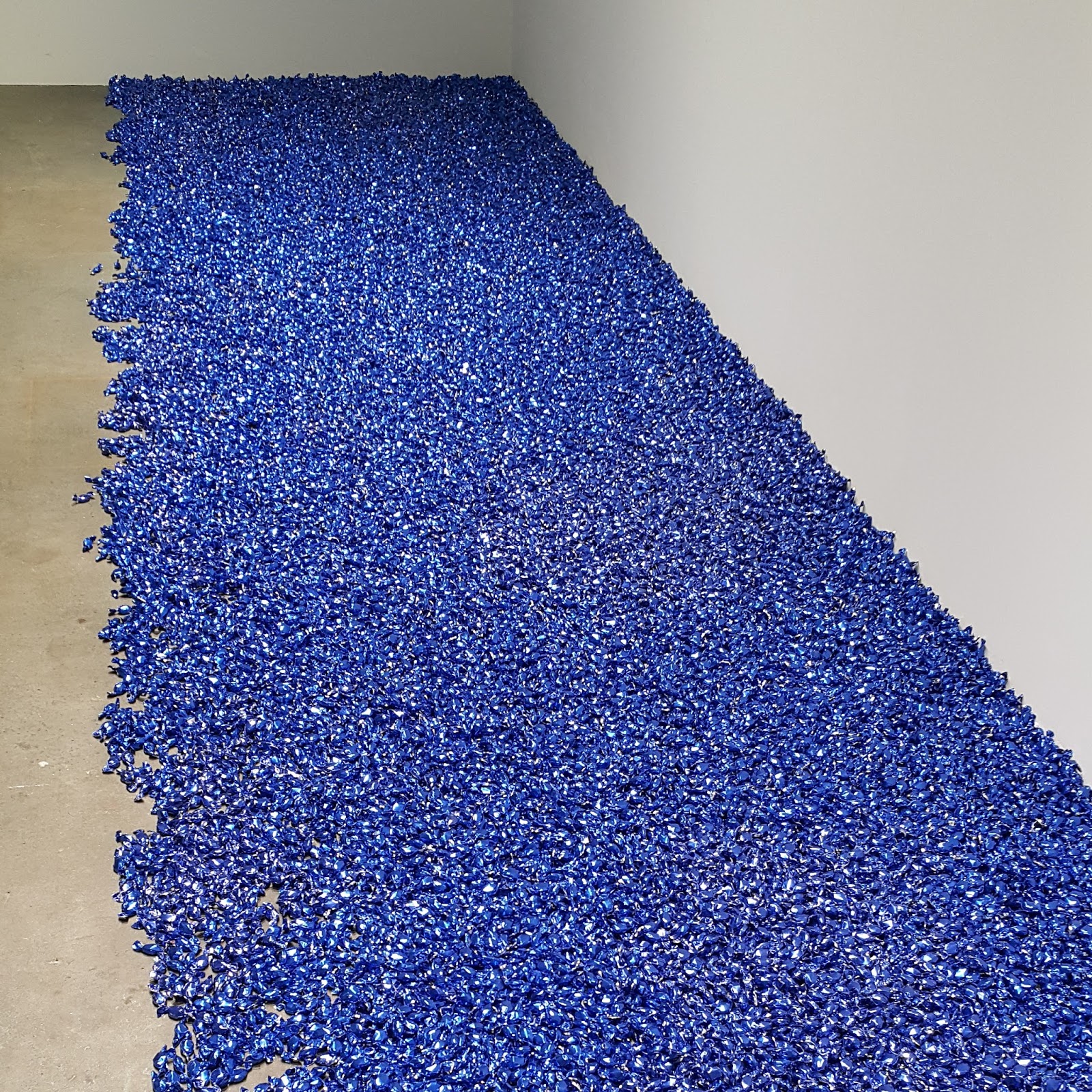
Untitled (Blue Plazebo)
By Gonzalez-Torres

An Extended Gray Scale
By Marcia Hafif

112 ● Never Argue with Police Officers,
and Address Then as "Officers"
By Tony Lewis

Under Blossomb : Lousy Elegy
By Helen Marten

Stacked
By Ai Weiwei

Portrait of Marie
By Mickalene Thomas

VSG-Gruppe
By Martin Honert

We No.1
By Xie Nanxing

Access
By Rita McBride

Emma (Pink)
By Yves Scherer

Eclipse
By Claude Leveque

Five and Twenty
By Cosima Von Bonin

MammeryLooLoo
By Sarah Lucas

Albizzin
By Damien Hirst

Bamboo Forest
By Liu Wei

Paper Bag
By Susumu Koshimizu

n.t.
By A. R. Penck

Dialogue
By Lee Ufan

Zwillingstochter (No.2)
By Gregor Schneider

Plan for Brugge No.3
By Tadashi Kawamata

Senza Titolo
By Jannis Kounellis

Aggression of a Writer
By Camille Henrot

Orrizonte
By Alberto Garutti

Ecology and Socialism
By Joseph Beuys

The Watcher
By Jan Worst

Tool Vitrine
By Thomas Hirschhorn

Hollow Mouse
By Katharina Fritsch


I cannot wait to go for Art | Basel 46


* kopihangtuah


| mcmlxxv:viii:xxix |